What Makes a Sneaker Comfortable? 7 Features to Look For
What Makes a Sneaker Comfortable?
A comfortable sneaker should feel good on your feet even after hours of walking or standing. But what makes a sneaker comfortable?
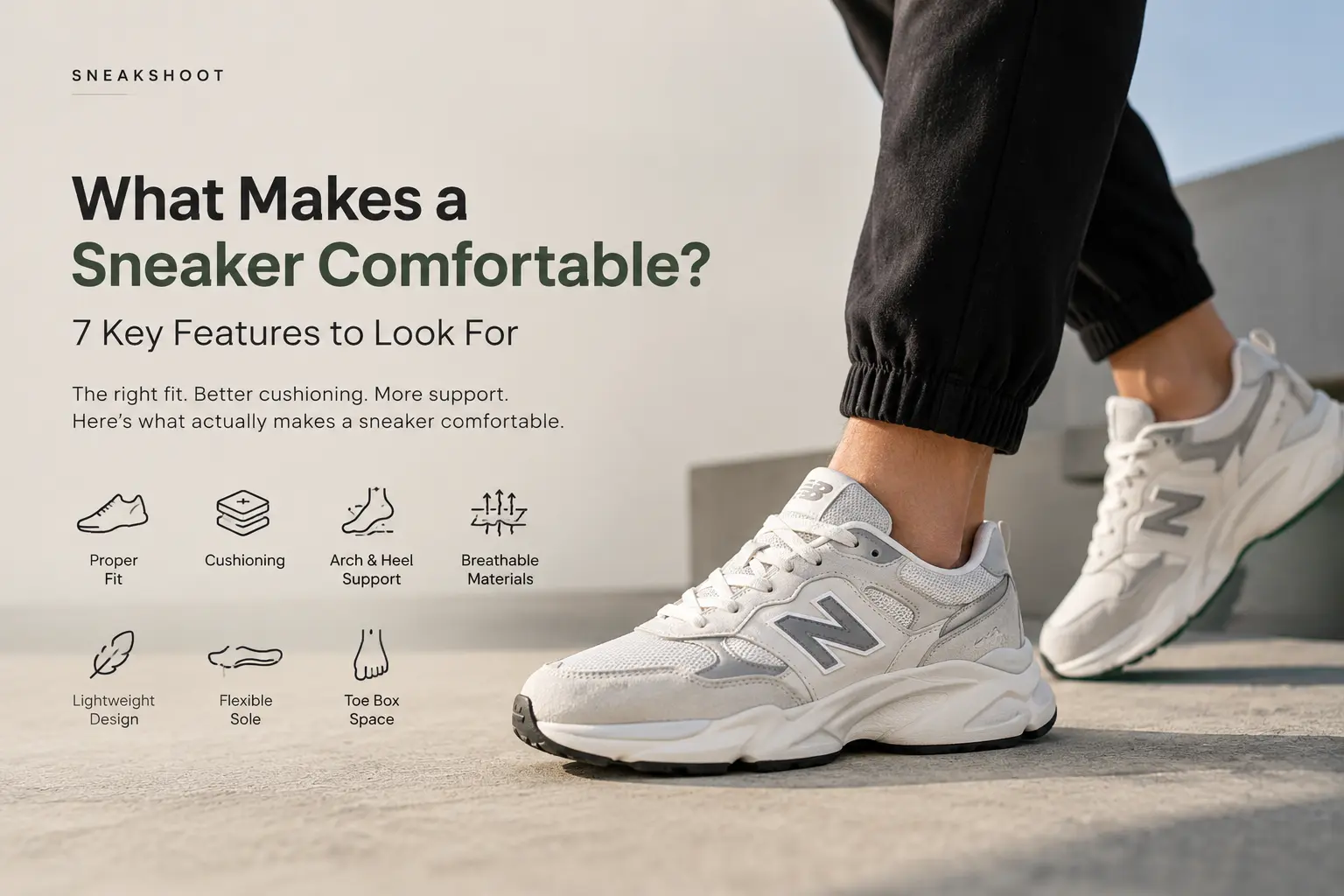
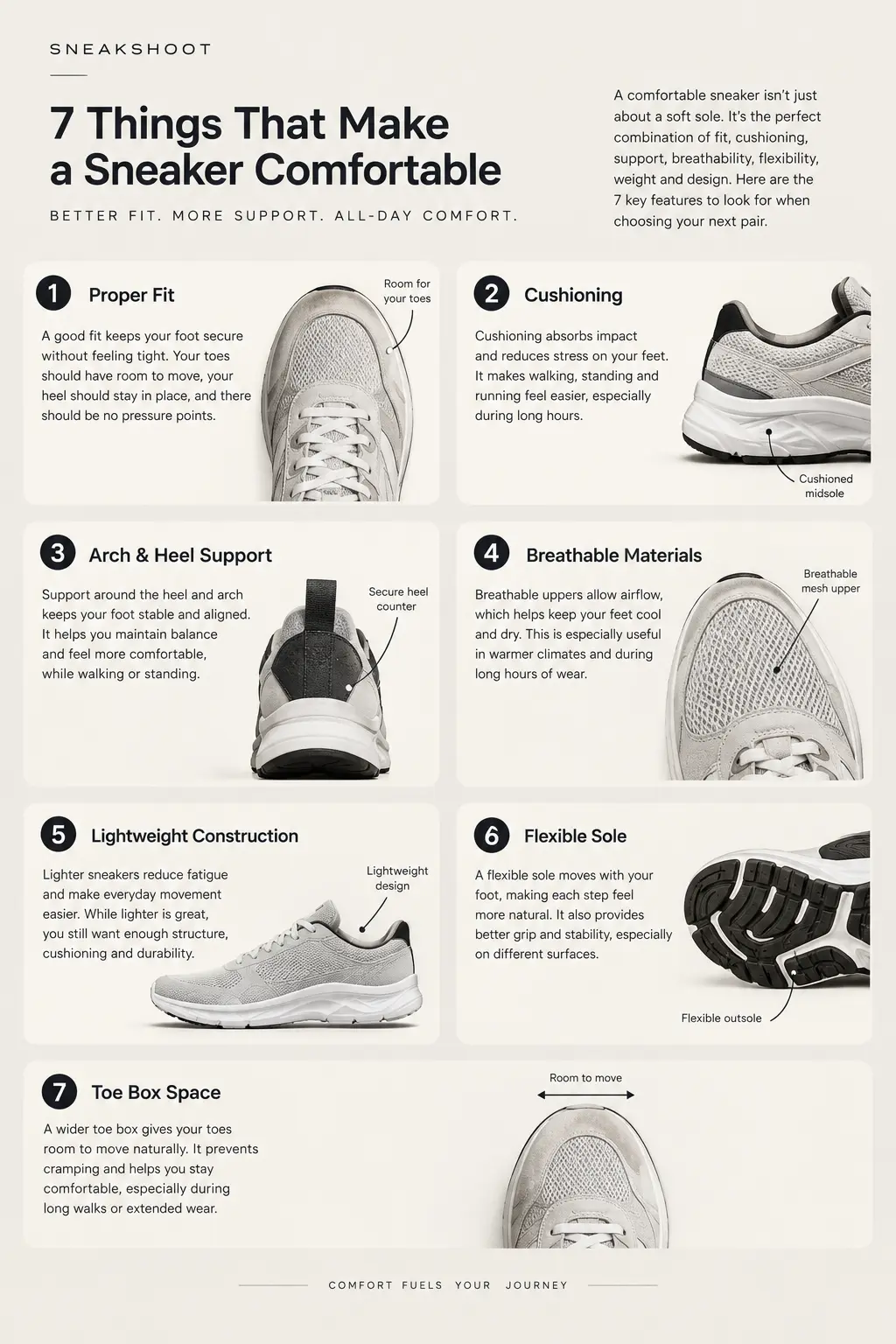
The answer isn’t just cushioning. A truly comfortable sneaker combines the right fit, cushioning, support, breathability, flexibility, weight and toe-box space.
Whether you’re looking for comfortable sneakers for everyday wear, college, travel or long walks, understanding these features can help you choose a pair that feels better throughout the day.
Quick Answer: What Makes a Sneaker Comfortable?
The most important factors that contribute to sneaker comfort are:
- Proper fit
- Good cushioning
- Heel and arch support
- Breathable materials
- Lightweight construction
- A flexible sole
- Enough toe-box space
The best sneakers aren’t necessarily the most expensive ones. The right combination of these features depends on how you plan to use them.
1. Proper Fit Is the Foundation of Comfort
Even the most cushioned sneaker won’t feel comfortable if it doesn’t fit properly.
A comfortable sneaker should hold your foot securely without squeezing it. Your heel should stay in place while walking, while your toes should have enough room to move naturally.
When trying sneakers, check for:
- Enough space around your toes
- A secure but comfortable heel
- No pressure points
- No excessive movement inside the shoe
- Enough width for your feet
Your feet can also swell slightly throughout the day, so trying sneakers later in the day can help you judge the fit more accurately.
Simple rule: If a sneaker feels uncomfortable when you first try it, don’t assume it will automatically become comfortable after wearing it.
2. Cushioning Makes a Big Difference
Cushioning is one of the first things people notice when they put on a pair of sneakers.
Good cushioning helps absorb some of the impact created when your feet hit the ground. This can make sneakers more comfortable during walking, commuting and everyday activities.
However, more cushioning doesn’t always mean more comfort.
A sneaker with extremely soft cushioning may feel comfortable initially but may not provide the stability you need. The ideal amount of cushioning depends on your activity and personal preference.
For everyday sneakers, look for cushioning that provides a comfortable balance between softness, responsiveness and stability.
3. A Good Sole Should Be Flexible
The sole plays an important role in how a sneaker feels when you walk.
A completely rigid sole can make natural movement feel restricted, while a sole with some flexibility can allow your foot to move more naturally.
For everyday sneakers, look for:
- A flexible forefoot
- Good traction
- Adequate shock absorption
- A stable base
If you’re buying sneakers primarily for walking, flexibility and traction become particularly important.
4. Breathable Materials Keep Your Feet Comfortable
Breathability is especially important when you’re wearing sneakers for several hours.
Materials that allow air to circulate can help reduce the buildup of heat and moisture inside the shoe.
Breathable sneakers can be particularly useful for:
- Everyday wear
- College
- Travel
- Long walks
- Warm weather
Mesh and other breathable textile materials are commonly used in sneakers to improve airflow.
For India’s warmer climate, choosing a sneaker with good ventilation can make a noticeable difference during extended wear.
5. Lightweight Sneakers Can Feel Better for Everyday Use
Nobody wants to feel like they’re carrying extra weight on their feet all day.
Lightweight sneakers can make walking and everyday movement feel easier, particularly when you’re wearing them for extended periods.
This doesn’t mean the lightest sneaker is automatically the most comfortable sneaker.
A good everyday sneaker should balance low weight with cushioning, support and durability.
If you’re looking for comfortable sneakers for college, commuting or travel, weight is definitely a feature worth considering.
6. Heel and Arch Support Matter
Your heel and arch are important parts of your foot, so the sneaker should provide a comfortable and secure feel around these areas.
A well-designed sneaker should keep your foot stable without creating unnecessary pressure.
Look for:
- A secure heel counter
- Comfortable heel cushioning
- A supportive mid-sole
- An insole that feels comfortable under your foot
However, everyone’s feet are different. The amount of support that feels comfortable for one person may not feel the same for another.
If you have specific foot problems or persistent pain, it’s better to consult a qualified healthcare professional rather than relying on a sneaker alone.
7. Give Your Toes Enough Room
Your toes shouldn’t feel cramped inside your sneakers.
A comfortable toe box gives your toes enough space to sit naturally and move without being squeezed together.
When checking a sneaker, make sure:
- Your toes aren’t touching the front
- Your toes aren’t compressed from the sides
- Your foot doesn’t slide excessively
- The shoe feels comfortable while standing and walking
Getting the correct size and width can make a significant difference to overall sneaker comfort.
How to Choose Comfortable Sneakers in India
The best comfortable sneakers depend on where and how you’re going to wear them.
For Everyday Wear
Choose sneakers with a comfortable fit, moderate cushioning, breathable materials and a durable out-sole.
For College
If you’re wearing sneakers for several hours every day, prioritize lightweight construction, cushioning and breathability.
For Travel
Travel sneakers should ideally be lightweight, comfortable and versatile enough for extended walking.
For Long Walks
Focus on fit, cushioning, stability, flexibility and traction rather than choosing a sneaker purely because it looks good.
For Hot Weather
Breathability becomes especially important. Look for materials that allow better airflow and avoid unnecessarily heavy construction.
Are Expensive Sneakers More Comfortable?
Not necessarily.
Price doesn’t automatically determine comfort.
A more expensive sneaker may use premium materials or advanced cushioning technology, but comfort ultimately depends on how well the sneaker fits your feet and matches your intended use.
A reasonably priced sneaker with the right fit can feel more comfortable than an expensive sneaker that doesn’t suit your foot shape.
The best sneaker for you is the one that fits well and feels comfortable for the way you use it.
Frequently Asked Questions
What makes a sneaker comfortable?
A sneaker’s comfort depends on several factors, including proper fit, cushioning, support, breathability, flexibility, weight and toe-box space.
How should comfortable sneakers fit?
Comfortable sneakers should feel secure without being tight. Your heel should remain stable, while your toes should have enough space to move naturally.
Are lightweight sneakers more comfortable?
Lightweight sneakers can feel more comfortable for everyday activities because they reduce the amount of weight on your feet. However, weight should be balanced with cushioning, support and durability.
What type of sneakers are best for walking?
For walking, look for sneakers that offer a comfortable fit, cushioning, flexibility, stability and good traction. The ideal choice also depends on your individual foot shape and walking needs.
Are breathable sneakers better for everyday wear?
Breathable sneakers can be a good option for everyday wear because they can help reduce heat and moisture buildup, particularly in warmer conditions.
How do I choose the right sneaker size?
Your sneaker should provide enough room for your toes while keeping your heel secure. Don’t choose a size based only on the number printed on the shoe—fit can vary between brands and models.
Final Thoughts
So, what makes a sneaker comfortable?
It’s the combination of several features rather than one specific element. A good fit, appropriate cushioning, breathable materials, a flexible sole, adequate support, lightweight construction and sufficient toe-box space all contribute to better sneaker comfort.
Before buying your next pair, think about where you’ll wear them, how long you’ll wear them and what type of movement you’ll be doing.
The right sneaker isn’t simply the one that looks best. It’s the one that fits your feet and works for your lifestyle.
No responses yet